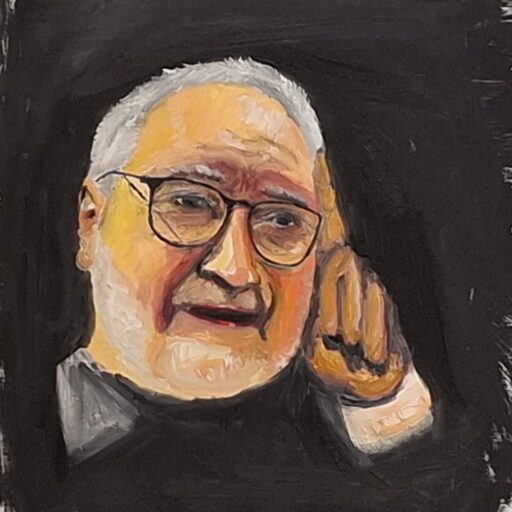
Gustav Mahler in Helsinki 1907
Travels and Concert November 1st 1907 (part 1)
It seems fitting to start this ‘Finnish blog’ by looking back 118 years: The Emperor has released Gustav Mahler from his duties at the Vienna Court Opera. He is on a journey which has just turned back towards Vienna. He has arrived from Helsinki to St. Petersburg (by night train 2-3.11). This journey has sometimes been described as the last ‘European tour’ before leaving for New York. The story could also be told this way: “Mahler visited Helsinki and stopped both ways in St. Petersburg”, but of course, Helsinki was not the main destination. However, Edvard Fazer, Robert Kajanus and Akseli Gallen-Kallela had somehow managed to convince him that Helsinki was worth a visit. Edvard Fazer, founder of the Fazer Artists’ Management Inc. was an internationally networked impresario and active organizer of concerts. It seems that Mahler already knew Robert Kajanus, who was in lead of the Helsinki Philharmonic Orchestra. Akseli Gallen-Kallela was a Finnish painting artist, who was closely connected to the Secession group in Vienna and thus already earlier acquainted with Gustav and Alma Mahler. He played an important role in hosting Mahler in Helsinki.
The tour was more of a daily job than a glamorous one. It consisted of only three concerts, two in St. Petersburg, and one in Helsinki. It took more than four weeks (19.10.-12.11. 1907) and became possible in a window between the liberation from obligations in Hofoper and depart to New York. While Mahler was heavily criticized in Vienna for travels to conduct his own music, that was not a real issue. His concert performances had been typically part of music festivals, often organized outside of the seasons in the opera. In other words, Mahler had very limited experience in travelling and conducting ‘for money’. One may wonder why he ended doing that in a small auditorium for 700 in a distant Helsinki. Also, how could Edvard Fazer get the concert funded? I do not know of details but suspect that the economic business plan could have been better for both parties. The tickets were sold from 4 to 7 Finnish marks (1 mk for students). If we assume equal number for each five price groups (140*5=700) and believe the Almighty Intelligence, we get 14 500 euros to cover all the costs.
Mahler had hoped to travel with his wife Alma. They had endured a difficult summer and Alma was still dealing with the aftereffects. His daily letters to Alma indicate deep concerns about the well-being of Alma, who did not have the energy to go with him. [#]
Mahler arrived in Helsinki on Tuesday morning (by night train 28-29.10). The concert was not until Friday (1.11.) and apparently they were still rehearsing then. This is indicated by the cancellation of the morning program in the concert venue at Helsinki University. However, Mahler was very satisfied with the orchestra, which had been prepared under the direction of Robert Kajanus. The program included music that the orchestra was already familiar with. Performing Mahler’s own compositions would have been a bigger project. On the way back, in St. Petersburg, Mahler conducted his Fifth Symphony, and rehearsing of it began already before leaving for Helsinki. That was, why the departure for Helsinki had to be postponed for a day.
In Helsinki, the program included Beethoven’s Fifth Symphony and the Coriolan Overture. Wagner’s Overture and Liebestod from “Tristan and Isolde” and the Overture from “Die Meistersinger von Nürnberg” were also played. The concert was sold out and, according to what was written in the newspapers, a landmark event. Mahler was offered laurel wreaths, which he did not want to accept, however. Kajanus had commissioned a wreath on behalf of the orchestra. Another was offered by the Finnish opera singer Aino Ackté.
There is much more to tell about the visit to Helsinki. One of the most famous Mahler quotes came from Sibelius’ later recollection on their brief conversation. I will return to that shortly and perhaps even to the four concert reviews in Helsingin Sanomat, Uusi Suometar, Hufvudstadsbladet, Nya Pressen. However, the adventures with Akseli Gallen-Kallela are more topical right now. That is why
Next (part 2):
Gustav Mahler and Akseli Gallen-Kallela
[#] I wrote here a footnote with some details, but noticed that an edit is needed to avoid misleading text. The time was hard in Mahler family and misleading writing can be easily found. I don’t want to contribute in that section. So, I’ll return after revisiting the available documentation.