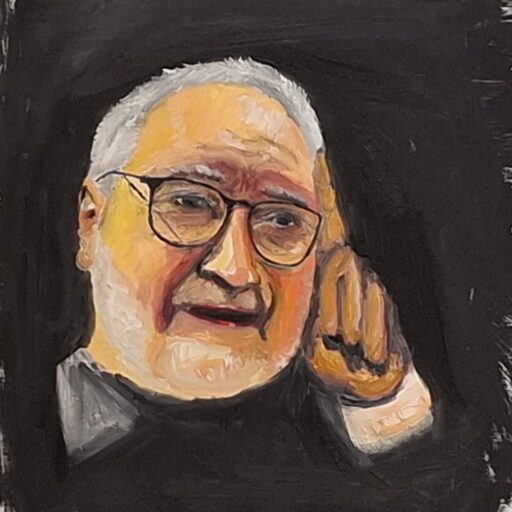
Leonard Bernstein (1918 – 1990)
Leonard Bernstein was a highly visible and influential person promoting the ‘afterlife’ popularity of Mahler’s music – exactly “50 years after” as predicted and emphasized by Mahler. Bernstein was not the only one and I’m confident that Mahler would have succeeded without him. However, the timing and rise in popularity could have been delayed without the contributions of Leonard Bernstein, Aaron Copland, Willem Mengelberg and
Juliette Nadia Boulanger (1887 – 1979)
Nadia Boulanger was a French music teacher, conductor and composer. She taught many of the leading composers and musicians of the 20th century, also Henry-Louis de La Grange, for five years on counterpoint and analysis. Boulanger was not known to be particularly fond of Mahler’s music, but it is possible that she played an important key role in ignition of Mahlers fame in USA – and globally.
Willem Mengelberg invited Mahler to introduce his own music in Amsterdam and founded the famous Mahler tradition of the Royal Concertgebouw Orchestra. Mahler presented the symphonies 1-5 and 7 and edited some of them while rehearsing them with the Concertgebouw Orchestra. As a result, they became tuned for the acoustics of the Concertgebouw. This may have further supported the fame of ‘Mahler in Concertgebouw’, which flourishes even today. Mengelberg organized the first Mahler Festival in May1920, conducting eight symphonies (1-9, but omitting the fourth), Das Lied von der Erde and song cycles in nine concerts. Concertgebouw hosted another festival and symposium in 1995 and certainly the most impressive one this year, May 9th – 18th 2025. Mengelberg, Concertgebouw and the festivals will be subjects of separate posts.
Matthew Mugmon, Assistant Professor of Music at the University of Arizona has studied the details of Nadia Boulanger’s participation and role in the Festival. In September 2019, before Covid, and in high expectations on the forthcoming massive Mahler Festival 2020 in Amsterdam (postponed to 2025), Mugmon wrote an interesting blog post on the chain of events started with the 1920 Amsterdam Festival. He found out that Boulanger was the organizers’ primary contact in France. Mengelberg approached her and asked of critics and composers to be included in list of invitees from France. Boulanger was not interested in Mahler, but in Mengelberg, and participated in the festival. As a result she brought scores of Mahler’s works to Paris. Naturally, she found interesting features in the scores and gave them (with her notes) for reading to Aaron Copland, who started the following year as her student in the French Music School for Americans (1921-1935) in Fontainebleau. Copland found interest in Mahlers music, passed it for the next generation, i.e., to Leonard Bernstein, and the rest became history. This story is probably best explained in Matthew Mugmon’s book, “Aaron Copland and the American Legacy of Gustav Mahler“, which I haven’t seen though.
I’ll continue on Bernstein later on. Just a few words now:
The New York Philharmonic had contracted Gustav Mahler in 1909 as the principal conductor. It was the only symphonic orchestra where Mahler worked as music director without any opera responsibilities, freeing him to explore the symphonic literature more deeply (after composing most of his own symphonies). Indeed, it good to realize that before this, Mahler worked for operas, and composed no opera (except “Die drei Pintos” which Carl Maria von Weber had began and Mahler completed 61 years after death of von Weber).
Leonard Bernstein was music director of the New York Philharmonic (1957-1969, as Mahler was 1909-1911) and generated a legacy of audio and video recordings. Television series were initiated on CBS and the Young People’s Concerts (1958-1972) made television history, winning every award in the field of educational television. Bernstein became a critical figure in the modern revival of the music of Gustav Mahler. The timing was correct, also because huge audiences – much larger than Mahler dreamed of when composing the Eight – were reached by the television. Mahler’s music gained special respect in the USA, probably and at least in part due to the use in connect with assassinations of Kennedy’s. Mahler’s second symphony by New York Philharmonic & Bernstein was broadcasted in full length by CBS in connection of the assassination of the president John F. Kennedy, “JFK”, and the last part with the choral “Resurrection” ode was played as part of the funeral service (1963). The “adagietto” part of M5 was played the funeral service of Robert F. Kennedy (1968). the “Resurrection Ode”. Better preserved recordings exist, but this four and half minute extract of M2 in 1963 suggests that it probably did a good job in American homes.