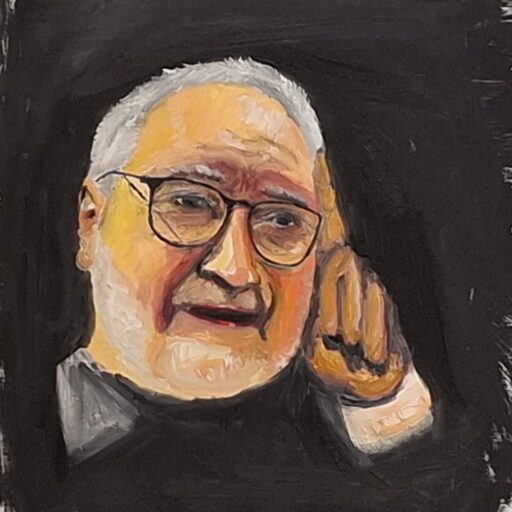
Mahler reading and Websites
Gustav Mahler’s music and life have been subjects of broad research and literature, more than any other composer’s. It seems that his model for symphonies “dealing with everything” has been adopted by the musicologists and other professionals. Mahler has been studied from every imaginable viewpoint, from Bach to Jazz, from theology to humor and irony, from psychoanalysis to cardiac mechanics, …
In following I aim to introduce some respected sources of information and analysis on Mahler. My list may be out of date, but contains strongholds which do not age. First of all, I like to introduce two major sources on Mahler’s life and daily events. They are:
- Biographical and analysis books by Henry-Louis de La Grange, and
- Gustav Mahler’s letters to Alma, with some background explaining comments.
When no reference is given for an event, date or other similar information in this blog, it is probably found from these two sources. See further details below.
- Donald Mitchell is another highly respected and referred ‘discoverer’ of Mahler from slightly different point of view, less biographic, more on music.
For professionals and students interested on composing and analysis rather than the composer, a good source might be an early study:
- Paul Bekker, “Gustav Mahlers Sinfonien”, Schuster & Loeffler, Berlin 1921, 360p.
or its translation to English with commentary as a Doctoral thesis in Musicology (in Boulder, where Mahler is properly respected).
Two more, for me very important sources need to be added:
- Bruno Walter’s small book on Mahler; a respectful memoir and study of his boss and mentor.
- ‘Naturlaut’, the journal of the Chicago Mahlerites, which provided inspiring articles focusing on topical issues and society news fostering a sense of togetherness between the musicians and audiences.
Henry-Louis de La Grange (1924-2017)
Henry-Louis de La Grange’s colossal achievement consists of books on Mahler’s life, personality and music, supported by detailed documentation on his professional activities, contacts and environments. In three volumes in French language first completed by 1984, then updated and expanded to a four volume version in English (826 + 1015 + 912 + 1776 pages); the volume 4 published in 2008 and a revision of vol.1 completed by his associate, Sybille Werner in 2020. Even the British ‘competing guru’ on Mahler, Donald Mitchell recommended to look these books for biography.
La Grange studied humanities, literature and music in Paris, Aix-en-Provence and Yale School of Music. Nadia Boulanger, who had much earlier behind the curtains contributed to Mahler’s legacy, taught him privately counterpoint and analysis. Gustav Mahler’s first touch on him had occurred on 20 December 1945 when Bruno Walter conducted the New York Philharmonic for Mahler’s, Ninth Symphony. The devotion to seriously investigate Mahler’s works and his life led him to collect and study all available material (original documents, composing hut in Toblach, Auguste Rodin’s bust of Mahler, …) and to interview first and second hand witnesses including Alma Mahler-Werfel and daughter Anna Justine. He got access even to some unpublished documents and archives.
La Grange lectured and organized symposia and festivals, not only on Mahler, but much focused on him. He founded an extensive research library and archive “Bibliothèque Gustav Mahler” downstairs of his house in Paris. The library deserves a mention of its own.
Bibliothèque Gustav Mahler
When I visited the library in 2008, it was difficult to find, because no signs outside on the street, just had to find the name and button of the doorbell to get in. That time the library looked much casual, like any public library in Finland and clearly aimed to be a working site for musicological research. La Grange had his home 4th floor upstairs. I must write a post on the brief friendly meeting with him. Since then, obviously when the home was not anymore in use, the building and library has underwent a comprehensive restoration and facelift to become a sophisticated party and meeting place (e.g. lecture series on Mahler October-December 2025). But certainly, the library and its valuable collections (not only on Mahler) are still accessible for researchers and students.
After the volume of this blog has grown sufficiently, you may pose a fair question: “Why Jussi pretends reporting ‘research’ on Mahler, by cutting bits and pieces from his books and about violating the copyright’s of Henry-Louis de La Grange?” I have asked the same, and assumed that not many of us have those books and time to read all the thousands of footnotes (5904 footnotes in vol. 4) – I haven’t. Furthermore, I’m confident that La Grange would not mind as long as I try my best to avoid distorting the truth. And the Oxford University Press would certainly ignore my deeds, if noticed. Anyway, I’ll avoid direct and extensive copying and give abbreviated references here and there – assuming that you recognize that a marking [LG-GM, vol.2, p. 744] refers to “Gustav Mahler, Volume 2, Vienna: The Years of Challenge (1897-1904)” and some day will find the full references on pages of this section.

So, having red this far, you probably have nothing better to do than to see the Mahler Foundation’s May 18th 2024 “Mahler Hour” zoom session discussing on Henry-Louis de La Grange and his deeds.
Donald Mitchell
… to be continued
Paul Bekker
… to be continued
Bruno Walter
… to be continued
Chicago Mahlerites
… to be continued
Boulder
… to be continued
Mahler societies around the world, Links coming here